
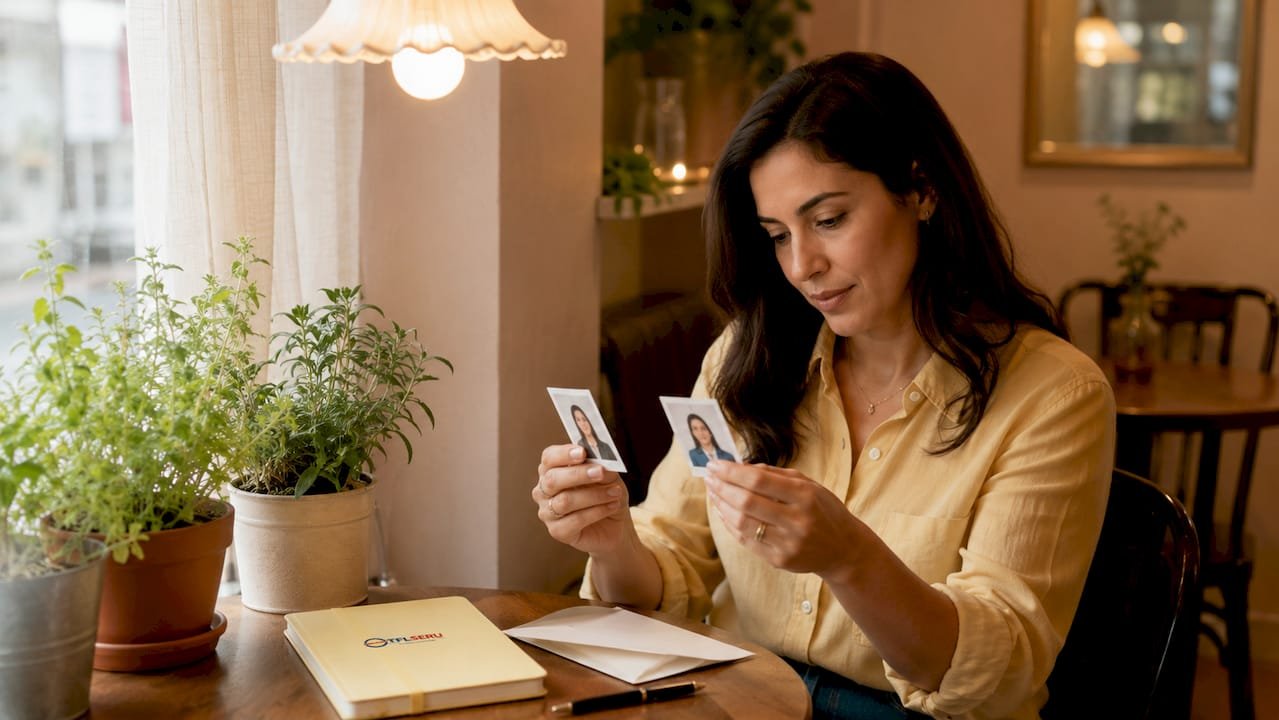
Transport for London requires every PCO licence applicant to submit two passport-sized photographs meeting UK standards as part of their application pack. The term “PCO licence” is informal shorthand. The official document is the private hire vehicle (PHV) driver licence, issued by TfL. Understanding the pco photo id requirements explained in TfL’s own checklist is the single most effective way to avoid delays before your application is even reviewed. Get the photos wrong and your entire submission stalls, regardless of how strong the rest of your documentation is.
What are the exact PCO photo ID requirements?
PCO photo ID requirements follow the same technical standards as UK passport photographs. UK passport photo size is 45mm height by 35mm width, and TfL applies these same dimensions to PHV licence applications. That means a photo printed to any other size will not be accepted.
Beyond dimensions, the quality standards are equally strict. Your photographs must meet all of the following:
- Colour image only. Black and white photographs are not acceptable.
- Plain light background. A white or cream background is standard. Patterned or dark backgrounds will fail.
- Clear, sharp focus. Blurred or pixelated images are rejected outright.
- Recent likeness. The photo must reflect your current appearance. A photo more than six months old is generally considered unsuitable.
- Neutral expression, mouth closed. No smiling, frowning, or raised eyebrows.
- Eyes open and clearly visible. Glasses are not permitted in UK passport photos and the same rule applies here.
- No shadows on the face or background. Shadows are one of the most common reasons photos fail.
- Full face visible, head straight. No tilting or turning.
The most common pitfall applicants encounter is using a photo booth that produces images slightly outside the 45mm x 35mm specification. Not all booths are calibrated to UK passport standards, particularly older machines.
Pro Tip: Use a professional photography service or a Post Office photo booth that explicitly states it produces UK passport-compliant photographs. Ask for a printed confirmation of the dimensions if you are unsure.

Submitting non-compliant photographs is one of the fastest ways to delay your PHV licence. Poor photo quality or an incorrect format leads directly to delays or refusal of licence processing. That delay can push your start date back by weeks.
How does TfL’s in-person photo capture work?
TfL requires many applicants to attend an in-person booking appointment as part of the PHV licence process. During this appointment, TfL staff review your documents and take a photograph of you directly. This is a separate step from the two photos you submit in your application pack.
The distinction matters more than most applicants realise. The photograph taken at your appointment often becomes the image displayed on your physical licence badge, not the one you submitted earlier. Your submitted photos serve identity verification during the review stage. The appointment photo is what gets printed on the card you carry every day.
Prepare for your appointment with these steps:
- Dress appropriately. Wear what you would normally wear as a professional driver. The appointment photo is your professional ID image.
- Arrive groomed and presentable. Your appearance on the day becomes your permanent licence photo.
- Bring all original documents. TfL staff check originals against your submitted copies. Missing a document means rescheduling.
- Do not wear glasses. Consistent with UK photo ID standards, glasses are not permitted.
- Arrive on time. Late arrivals may lose their appointment slot and face a significant wait for a new booking.
Applicants who underestimate the in-person photo step often face avoidable appointment delays. Treating the appointment as a formality is a mistake. TfL’s verification process is thorough, and the in-person photo is a deliberate security measure to confirm your identity at the point of licence issue.
Pro Tip: Check TfL’s current appointment guidance before you attend. Requirements and procedures are updated periodically, and the TfL application process for 2026 includes specific steps that differ from earlier years.
What documents accompany photo ID in a full PCO application?
Photo ID is one component of a broader documentation requirement. A complete PCO application requires multiple documents to establish both your identity and your eligibility to drive for hire in London. Understanding where photo ID sits within that full checklist helps you prepare everything at once rather than submitting piecemeal.
| Document | Purpose |
|---|---|
| Two passport-sized photographs | Identity verification and licence badge image |
| Completed PHV driver licence application form | Formal application submission to TfL |
| Proof of right to work in the UK (passport or residency card) | Confirms legal eligibility to work as a driver |
| UK driving licence details | Verifies driving entitlement and history |
| Medical fitness certificate (DVLA Group 2 standard) | Confirms physical fitness to drive professionally |
| Enhanced DBS (Disclosure and Barring Service) check | Criminal record disclosure for public safety |
| Two proofs of address | Confirms current residential address |
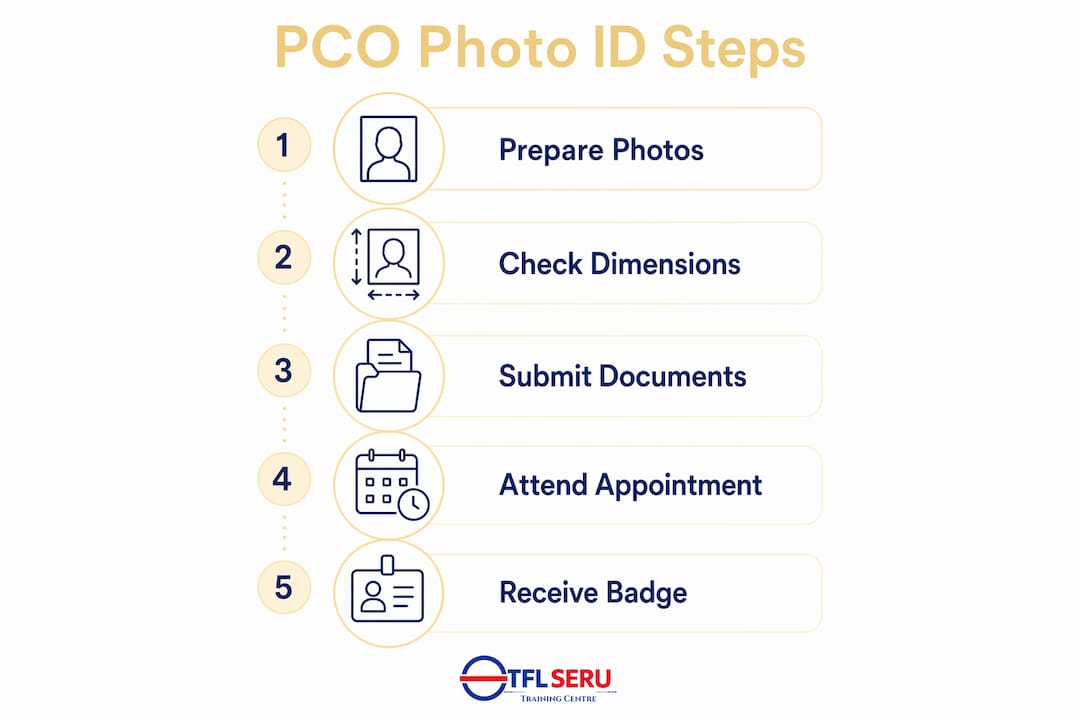
Each document serves a distinct purpose. The medical certificate, for example, must meet DVLA Group 2 standards, which are stricter than those required for an ordinary driving licence. The enhanced DBS check is mandatory and cannot be substituted with a basic check.
Photo ID verification sits at the centre of TfL’s identity confirmation process. Without compliant photographs, TfL cannot complete the identity verification stage, which means the rest of your documents cannot be processed either. Photo ID is not simply one item on a list. It is the gateway document that unlocks the rest of the review.
The phrase “PCO licence” is used informally across the industry, but TfL’s official terminology is the private hire vehicle driver licence. Always consult TfL’s current PHV driver licence document checklist rather than generic PCO guidance, as requirements are updated and informal sources may be out of date.
Common mistakes that delay PCO photo ID submissions
Submitting the wrong photographs is the single most avoidable cause of application delays. Unsuitable photos can delay your application or result in outright rejection of the submission. The good news is that every common mistake is preventable with a straightforward pre-submission check.
Watch out for these pitfalls:
- Wrong dimensions. Photos printed at 35mm x 45mm (portrait) are correct. Photos at any other size fail immediately.
- Outdated photographs. Using a photo from several years ago, even if it looks similar to you now, risks rejection on the grounds of currency.
- Shadows and glare. These are the most frequent technical failures. Take photos in even, natural light or use a professional booth.
- Wearing glasses. UK photo ID standards no longer permit glasses in passport or licence photographs. Remove them for every photo.
- Dark or patterned backgrounds. A plain, light background is mandatory. Home backgrounds with furniture or walls behind you are not acceptable.
- Forgetting the in-person appointment photo. Many applicants focus entirely on the submitted photos and arrive at their TfL appointment unprepared for a second photograph.
- Using an unverified photo booth. Not every high-street booth produces UK passport-compliant output. Verify before you print.
Reviewing photo compliance against official standards before submission prevents the back-and-forth that adds weeks to processing times. Build a simple pre-submission checklist and tick off each requirement before sealing your application pack.
Pro Tip: Print a copy of TfL’s current PHV driver licence document checklist and physically tick each item as you prepare it. This takes ten minutes and eliminates the most common submission errors entirely.
The PHV vs PCO licence distinction also matters here. Applicants who search for “PCO photo ID” guidance sometimes find outdated information that no longer reflects TfL’s current standards. Always verify against TfL’s own published checklist for the current year.
Key takeaways
Compliant PCO photo ID requires two UK-standard passport photographs, and TfL will also capture your image in person at your appointment, making both steps equally important to prepare for.
| Point | Details |
|---|---|
| Photo dimensions are fixed | Submit photographs at exactly 45mm x 35mm to meet UK passport standards. |
| Two photos are required upfront | Both photographs must be colour, recent, and on a plain light background. |
| TfL takes a second photo in person | The appointment photograph typically becomes the image on your physical licence badge. |
| Full document pack is needed | Photo ID unlocks the rest of the review; missing photos stall the entire application. |
| Pre-submission checks prevent delays | Verify every photo against TfL’s current PHV checklist before submitting your pack. |
Why photo ID compliance deserves more attention than most applicants give it
Most applicants I speak with treat the photo requirement as an afterthought. They spend weeks preparing their DBS check, sourcing their medical certificate, and gathering proof of address, then grab a photo from their phone at the last minute. That approach costs them time they cannot afford to lose.
TfL’s dual-photo process is genuinely different from most licensing systems in the UK. The fact that your submitted photographs serve a different function from your appointment photograph is not widely understood. Submitted photos verify your identity during the document review. The appointment photo becomes your permanent professional ID. Treating them as interchangeable is a mistake I see repeatedly.
The 2026 requirements have not fundamentally changed the photo standards, but TfL’s appointment booking system has become more structured. Rescheduling a missed or failed appointment now takes longer than it did in previous years. That makes first-time compliance more valuable than ever.
My honest advice is to book a professional photo session specifically for your PCO application. The cost is minimal compared to the cost of a delayed start date. Arrive at your TfL appointment dressed as you would for your first day on the job. The photo taken that day is the face your passengers will see on your badge for the duration of your licence.
Preparation is not about being cautious. It is about being ready to move forward without interruption.
— East
Eltconline’s support for London PCO applicants
Sorting your photo ID is one step in a longer process. The TfL topographical assessment is another requirement that catches many applicants off guard, and you only get two attempts before your entire TfL application resets.
Eltconline is a TfL-approved topographical test training centre based in Forest Gate, London E7. We have helped thousands of candidates pass their topographical mock test with confidence, using structured courses designed around TfL’s actual assessment format. If you are preparing your PCO licence application and want to tackle the topographical test without wasting either of your two attempts, get in touch with Eltconline today.
FAQ
What size must PCO licence photographs be?
PCO licence photographs must be 45mm in height by 35mm in width, matching UK passport photo standards. They must be colour, recent, and taken against a plain light background.
Does TfL take its own photograph at the appointment?
Yes. TfL staff capture a photograph during your in-person booking appointment, and this image is typically used on your physical PHV licence badge rather than the photos you submitted in your application pack.
Can I wear glasses in my PCO licence photo?
No. UK photo ID standards no longer permit glasses in passport or licence photographs. Remove glasses for both your submitted photos and your TfL appointment photograph.
What happens if my submitted photos do not meet the requirements?
TfL will delay or reject your application if your photographs do not meet the required standards. You will need to resubmit compliant photos, which adds significant time to your processing timeline.
Where can I find TfL’s current photo ID checklist?
TfL publishes its official PHV driver licence document checklist on its website. Always consult the current version directly, as requirements are updated and informal “PCO licence” guidance found elsewhere may be out of date.
Recommended
- London PCO Licence Application
- Applying for a PCO Licence
- PCO Licence London- Apply for private hire driver licence | ELTC
- FastTrack PCO Licence renewal service | Contact us now
