
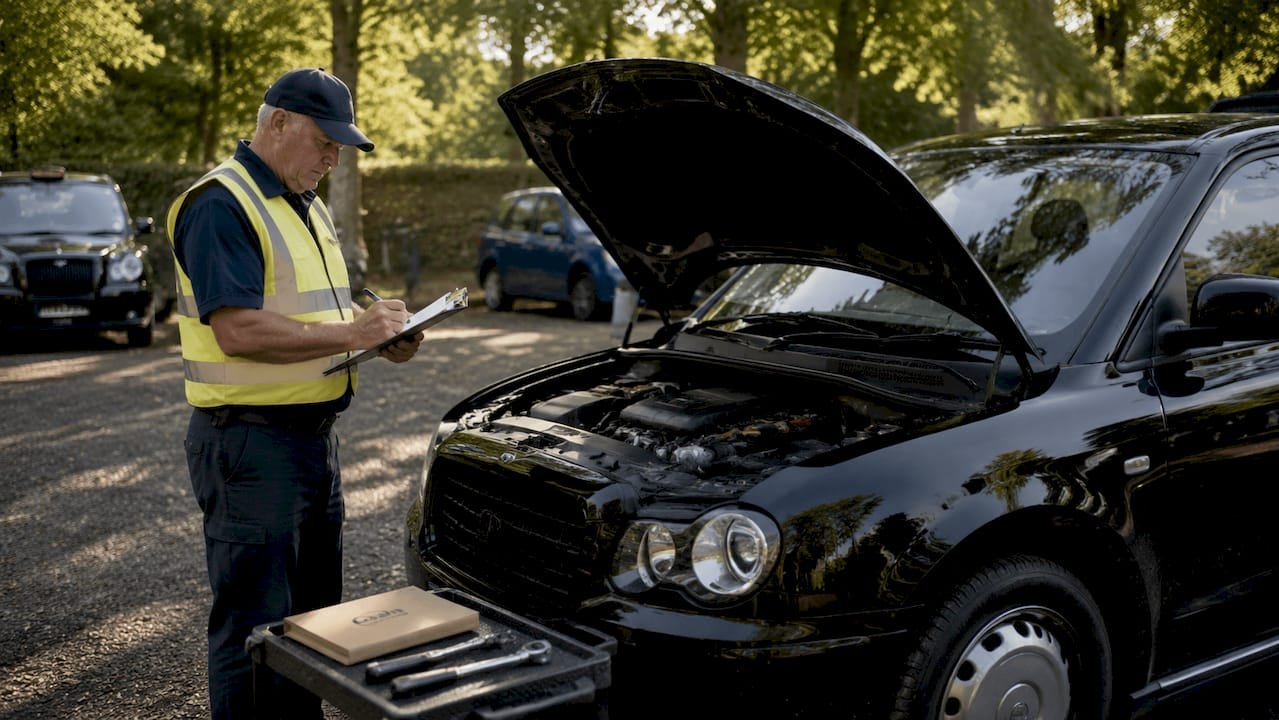
A PCO vehicle inspection is the mandatory safety and regulatory check required by Transport for London (TfL) to licence private hire vehicles (PHVs) for passenger service in London. Without passing this inspection, your vehicle cannot legally operate as a licensed private hire vehicle, regardless of whether it holds a valid MOT certificate. The PCO vehicle inspection explained here covers every stage of the process, from what inspectors check to how you book your appointment, so you can walk in prepared and confident.
What does the PCO vehicle inspection check?
The PCO vehicle check process covers far more ground than a standard MOT. PCO inspections exceed standard MOT requirements, with inspectors examining safety systems, bodywork condition, and modification declarations in detail. The goal is to confirm that every vehicle carrying paying passengers in London meets a higher standard of safety and comfort than privately owned cars.
Inspectors assess the following areas during the PCO vehicle check:
- Brakes, tyres, and lights: All safety systems must be in full working order. Tyre tread depth, brake response, and all lighting functions are tested directly.
- Bodywork and interior condition: Panels must be free from significant corrosion, damage, or sharp edges. The interior must be clean, with all seats, seatbelts, and fittings intact.
- Emissions compliance: London’s PCO vehicles must meet ULEZ standards, including Zero Emission Capable (ZEC) and Euro 6 criteria. Petrol and diesel vehicles that do not meet these thresholds are ineligible.
- Vehicle modifications: Any modifications to the vehicle must be declared in advance. Undisclosed changes are a direct route to failure.
- Documentation: You must bring your V5C logbook, valid insurance documents, and any relevant modification certificates to the appointment.
Pro Tip: Check your tyre tread depth with a 20p coin before your appointment. If the outer band of the coin is visible when inserted into the tread, your tyres will likely fail the inspection.
The emissions requirements deserve particular attention. TfL has tightened its ULEZ standards significantly in recent years. If you are considering which vehicle to purchase before applying, review the PCO approved vehicles list to confirm eligibility before you spend any money.

How to prepare your vehicle and avoid common failures
Proper vehicle preparation prevents costly failures and potential licence suspensions. Many drivers underestimate the rigour of PCO inspection requirements and arrive expecting a process similar to an MOT. That assumption leads to avoidable rejections.
Follow these steps before your inspection appointment:
- Service your vehicle fully. Book a full service at a reputable garage before your PCO inspection. Replace oil, filters, and any worn components. Inspectors notice signs of poor maintenance immediately.
- Check all lights and electrics. Walk around the vehicle and test every light, including hazard lights, reversing lights, and interior courtesy lights. Replace any failed bulbs.
- Inspect your tyres. All four tyres must meet legal tread depth requirements. Check for sidewall damage, uneven wear, and correct inflation.
- Clean the interior thoroughly. Seats, carpets, door panels, and the boot must be clean and undamaged. Torn upholstery or broken fittings will be noted.
- Gather all required documents. Bring your V5C, valid insurance certificate, and any modification paperwork. Missing documents will delay or cancel your appointment.
- Declare all modifications honestly. Undisclosed vehicle modifications are one of the most common causes of inspection failure. If you have added tinted windows, a towbar, or any non-standard fittings, declare them in advance.
- Verify emissions compliance. Confirm your vehicle meets Euro 6 or ZEC standards before attending. TfL will not licence a non-compliant vehicle regardless of its condition in other areas.
Pro Tip: Book a pre-inspection check with a PCO-specialist garage rather than a general mechanic. These garages know exactly what TfL inspectors look for and can flag issues that a standard service would miss.
Repairs must go beyond MOT standards. A vehicle can hold a valid MOT and still fail a PCO inspection. TfL applies DVSA defect categorisation, but the threshold for acceptable condition is higher for PHVs. Minor faults that pass an MOT may still result in a PCO failure.
How does the PCO inspection booking process work?
Booking a PCO vehicle inspection is done online through the TfL portal, which is available 24 hours a day, seven days a week. TfL operates multiple inspection centre locations across London, giving you flexibility on where to attend. Choose a centre that is convenient for you and select an appointment slot that gives you enough time to complete any final preparation.
Here is what to expect on the day:
- Arrival: Arrive at least 10 minutes early. Late arrivals may lose their appointment slot.
- Document check: The inspector will verify your V5C, insurance, and any modification certificates before the vehicle check begins.
- Physical inspection: The inspector examines the exterior bodywork, tyres, lights, and interior condition.
- Dynamic check: The inspection takes approximately 20–30 minutes, including a section where the inspector drives the vehicle inside the test garage to assess brakes, steering, and mechanical response.
- Result notification: You receive your pass or fail result at the end of the appointment.
The inspection cost typically ranges between £100 and £150, varying by vehicle age and type. Payment is made at the time of booking or at the inspection centre, depending on the location.
| Stage | What happens |
|---|---|
| Online booking | Select centre, date, and time via TfL portal |
| Document check | V5C, insurance, and modification certificates verified |
| Physical inspection | Bodywork, tyres, lights, and interior assessed |
| Dynamic check | Inspector drives vehicle to test brakes and steering |
| Result | Pass or fail issued at end of appointment |
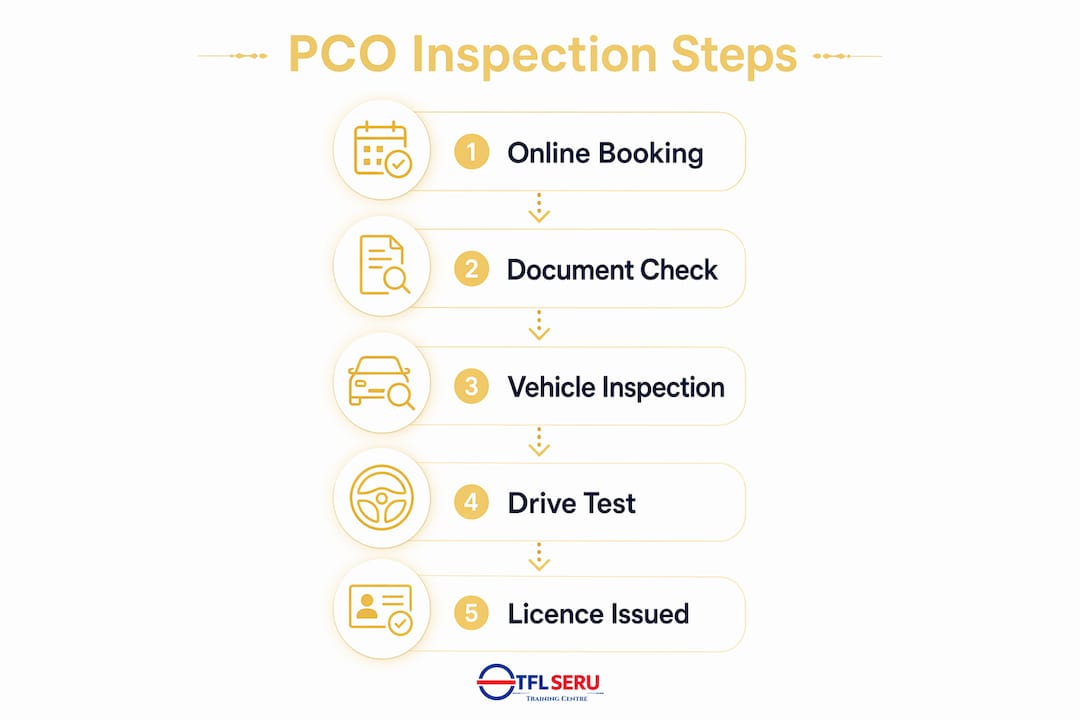
If your vehicle passes, TfL issues a vehicle licence valid for one year. PCO vehicle licences require an annual inspection to maintain valid licensing for private hire operation. If your vehicle fails, you receive a report detailing the faults. You must rectify all listed issues before rebooking.
PCO inspection vs MOT: what is the difference?
The MOT and the PCO inspection serve different purposes. The MOT confirms that a vehicle meets the minimum legal standard for road use. The PCO inspection confirms that a vehicle meets the higher standard required to carry paying passengers commercially in London.
“Inspectors apply a thorough and heightened standard during PCO inspections, beyond typical MOT assessments, to ensure maximum passenger safety.” — bestautoxperts.com
The table below shows the key differences between the two assessments:
| Requirement | MOT | PCO inspection |
|---|---|---|
| Enforcing authority | DVSA | Transport for London (TfL) |
| Emissions standard | Euro 4 minimum | Euro 6 or ZEC required |
| Interior condition | Not assessed | Fully assessed |
| Modification declaration | Not required | Mandatory |
| Validity period | 12 months | 12 months |
| Consequence of failure | Vehicle cannot be driven | Vehicle cannot be licensed as PHV |
TfL follows DVSA defect categorisation during PCO inspections, but the acceptable threshold is stricter. Repeated or significant faults lead to licence suspension, not simply a failed test. A driver whose vehicle repeatedly fails inspections risks losing their PHV licence entirely. That consequence makes thorough preparation non-negotiable.
You also need a valid PCO driver licence alongside your vehicle licence. If you are still working through the London PCO licence application process, understanding both requirements together will save you time and money.
Key takeaways
Passing a PCO vehicle inspection requires meeting TfL’s safety, emissions, and documentation standards, which are stricter than MOT requirements in every measurable area.
| Point | Details |
|---|---|
| PCO inspection is mandatory | TfL requires this check before any private hire vehicle can be licensed in London. |
| Emissions compliance is critical | Vehicles must meet Euro 6 or Zero Emission Capable standards to be eligible. |
| Declare all modifications | Undisclosed modifications are a leading cause of inspection failure. |
| Inspection exceeds MOT standards | PCO checks cover interior condition, emissions, and modifications that MOT does not assess. |
| Annual renewal required | PCO vehicle licences last one year and require a fresh inspection at each renewal. |
Why preparation is the only variable you can control
Working with drivers preparing for PCO licensing, the pattern I see most often is this: candidates who treat the PCO inspection like an MOT almost always face a second appointment. Those who treat it like a professional audit of their vehicle pass first time.
The most common mistake is assuming that a recent MOT means the vehicle is ready. It does not. An MOT confirms roadworthiness for general use. A PCO inspection confirms fitness for commercial passenger service. Those are different standards, and the gap between them catches drivers out every time.
What actually works is a structured pre-inspection process. Book a specialist garage check at least two weeks before your appointment. That gives you time to source parts, complete repairs, and recheck everything before the day. Rushing repairs in the 48 hours before an inspection is a recipe for missing something.
The emissions question is where I see the most expensive mistakes. Drivers purchase a vehicle, invest in insurance and preparation, then discover at inspection that the vehicle does not meet ULEZ or Euro 6 standards. Checking the PCO approved vehicles list before purchasing a vehicle takes five minutes and can save thousands of pounds.
Compliance is not a bureaucratic hurdle. It is the foundation of a sustainable private hire career in London. Drivers who build good habits around vehicle maintenance and documentation find that annual renewals become straightforward rather than stressful.
— East
Start your PCO journey with Eltconline
Passing your PCO vehicle inspection is one part of becoming a licensed private hire driver in London. The TfL Topographical Assessment is another requirement that many candidates find challenging, with only two attempts permitted before the entire application must restart.
Eltconline, based in Forest Gate, London E7, is a TfL-approved topographical training centre that has helped thousands of candidates pass their assessments with confidence. The training packages at Eltconline are designed to prepare you thoroughly for every stage of the PCO licensing process, including mock tests that replicate real exam conditions. If you want to give yourself the best possible chance of passing first time, explore Eltconline’s TfL topographical mock test and book your place today.
FAQ
What is a PCO vehicle inspection?
A PCO vehicle inspection is the official safety and compliance check required by Transport for London before a private hire vehicle can be licensed. It covers safety systems, emissions standards, bodywork condition, and modification declarations.
How long does a PCO vehicle inspection take?
The inspection takes approximately 20–30 minutes, including a section where the inspector drives the vehicle to assess brakes and steering.
How much does a PCO vehicle inspection cost?
The cost typically ranges between £100 and £150, depending on vehicle age and type.
What are the most common reasons for PCO inspection failure?
The most common causes of failure are undisclosed vehicle modifications, non-compliance with ULEZ or Euro 6 emissions standards, and poor vehicle condition that falls below TfL’s standards for passenger service.
How often do I need a PCO vehicle inspection?
PCO vehicle licences are valid for one year. You must pass a fresh inspection at each annual renewal to maintain your vehicle’s licensed status for private hire operation.
Recommended
- PCO approved vehicles list London: 2026 guide
- London PCO Licence Application
- Applying for a PCO Licence
- PCO Licence London- Apply for private hire driver licence | ELTC
