
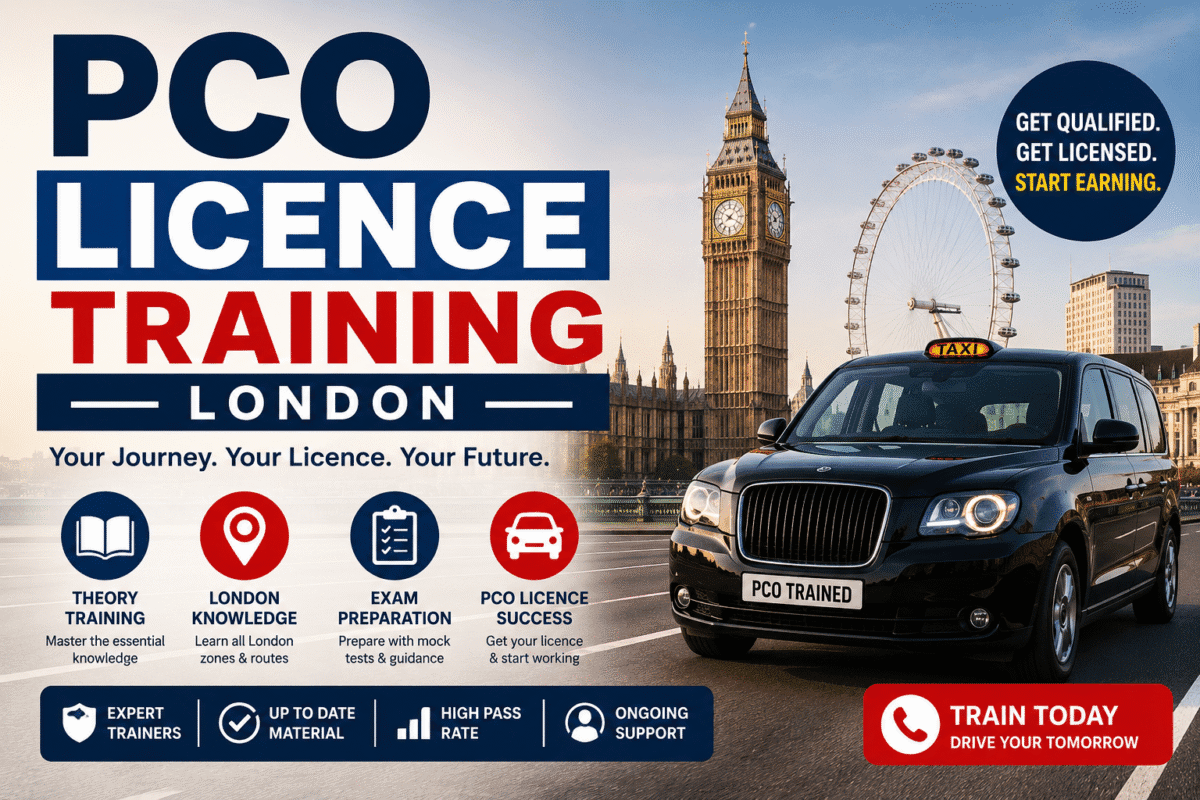
Starting a career as a private hire driver in the capital offers incredible flexibility, independence, and strong earning potential. However, before you can start accepting fares on popular apps like Uber, Bolt, or Addison Lee, you must navigate a highly regulated licensing process. This is exactly where high-quality PCO Licence Training London comes into play. Whether you are entirely new to the trade or you are an existing driver needing to update your qualifications, securing your london pco licence requires passing several rigorous assessments set by Transport for London (TfL).
The process might seem daunting at first glance, but with the right preparation and guidance, you can breeze through it. Let’s break down exactly what you need to know to get on the road smoothly, safely, and successfully.
Navigating the Application: A Clear Route to Your New Career
To avoid unnecessary delays and administrative headaches, it is highly recommended to follow a step by step TfL driver application guide. The application process involves a mixture of background checks, medical clearances, and examinations. Approaching these systematically will save you a considerable amount of time, stress, and money.
Medical and Background Clearances
Passenger safety is TfL’s absolute top priority. Because of this, you must strictly meet the private hire driver medical requirements London mandates. This involves undergoing a thorough health assessment for private hire licensing, which is usually completed by your NHS GP or a TfL-approved private medical professional. This medical check confirms that you meet the DVLA Group 2 medical standards, checking vital health metrics like your vision, cardiovascular health, and any underlying conditions that could affect your driving ability.
Alongside your medical clearance, you will need to prove your good character. Applying for an enhanced DBS check for taxi drivers is a mandatory step to ensure passengers are in safe, trustworthy hands. Ensure you apply for your Disclosure and Barring Service check as early as possible through TfL’s authorised service provider, as processing times can occasionally hold up your overall application.
Tackling the TfL Assessments: SERU and English Proficiency
Modern private hire drivers must demonstrate a solid understanding of safety protocols, passenger equality, and local regulations.
If you find yourself wondering how to pass TfL SERU assessment, the secret lies in diligent preparation. SERU stands for Safety, Equality and Regulatory Understanding. The computer-based test consists of multiple-choice questions and reading comprehension tasks. Success here largely comes down to mastering the TfL driver handbook, which contains all the rules, responsibilities, and safeguarding practices expected of you as a licensed driver.
Communication is equally vital in this profession. TfL strictly enforces English language proficiency for PHV drivers, which is now integrated directly into the SERU test. You must be able to read, write, and communicate effectively in English. This ensures you can assist passengers properly, understand vital regulatory updates, and communicate clearly with emergency services if an incident occurs.
Mastering the Map: The Topographical Skills Test
Even in an era dominated by advanced sat-nav technology, TfL requires drivers to have a strong foundational knowledge of London’s complex geography. The topographical skills test remains one of the most challenging hurdles for new applicants.
Dedicated TfL topographical test preparation is absolutely essential. The exam tests your ability to read the standard A-Z Master Atlas of Greater London, identify key landmarks, and plot the most direct, legally compliant routes between two points. To build your confidence, you should look for training providers that offer intensive topographical training mock exams. These simulated tests mirror the real software used by TfL at their assessment centres, allowing you to practise under timed conditions and familiarise yourself with the digital interface.
If you have previously struggled with this exam, do not panic. Overcoming topographical test failure is entirely possible with the right guidance. By identifying exactly where you lost marks—whether it was basic map reading, compass directions, or complex route planning—and focusing your revision on those specific areas, you will drastically improve your chances of passing on your very next attempt.
Choosing the Right Training Provider
You certainly do not have to tackle this rigorous process alone. Enrolling in a reputable london pco licence and training centre can provide the structured, professional learning environment you need. When searching for pco training london, you will find various formats tailored to different learning styles, schedules, and budgets.
- Finding Your Learning Style: You will need to weigh up online vs classroom PCO courses. Online courses offer brilliant flexibility if you are currently working another job, allowing you to study at your own pace from the comfort of your home. Conversely, classroom-based learning provides face-to-face support from experienced tutors, which many applicants find invaluable—especially for the highly visual topographical map-reading elements.
- Speeding Up the Process: If you are eager to get out on the road as quickly as possible, look into fast track PCO licence training packages. These intensive courses smartly bundle SERU preparation, topographical map training, and general application support into just a few short days.
- Do Your Research: Before parting with your hard-earned cash, always check the best PCO training schools reviews. Genuine feedback from past students on independent review platforms will help you choose a training provider with consistently high pass rates and excellent tutor support.
Support from Ride-Hailing Platforms
It is also worth noting that major operators sometimes offer support for new drivers looking to join their fleets. For example, the Uber Ignition program London provides free advice and guidance sessions to help prospective drivers understand the TfL requirements and the broader application process. Taking advantage of these free resources can give you a helpful head start and a clearer understanding of what to expect once you are officially licensed.
Budgeting for Your New Career
Understanding the full cost of getting a private hire licence is a vital part of your initial business plan. While prices fluctuate and depend largely on the training providers you choose, you should actively budget for several separate fees:
- TfL Application and Grant Fees: Paid directly to Transport for London to process your application and issue your licence.
- Background Checks: The fee for the mandatory enhanced DBS check.
- Medical Examination: GP fees vary wildly, so shop around for a TfL-approved private doctor if your local NHS surgery quotes a high price.
- Assessment Fees: TfL charges separately for both the Topographical and SERU tests.
- Tuition: Training course fees for your chosen PCO academy.
In total, you can expect the initial outlay to be anywhere between £500 and £800 before you even look into leasing or buying a compliant vehicle. While this might seem steep initially, it is best to view it as a necessary investment in a long-term career that offers immediate financial returns once you are fully licensed and taking fares.
Final Thoughts
Earning your private hire credentials in the capital is a multi-step journey that requires dedication, thorough studying, and a bit of patience. From passing your medical and background checks to navigating the SERU assessment and mastering the iconic A-Z map, getting the right educational support is crucial.
By investing in high-quality training, taking advantage of mock exams, and fully understanding the rules of the road, you will be well on your way to a profitable and highly flexible driving career in London. Stay focused, prepare diligently, and you will soon be proudly displaying that green PCO badge in your windscreen.
